A door, on a man's back, at 3,000 metres
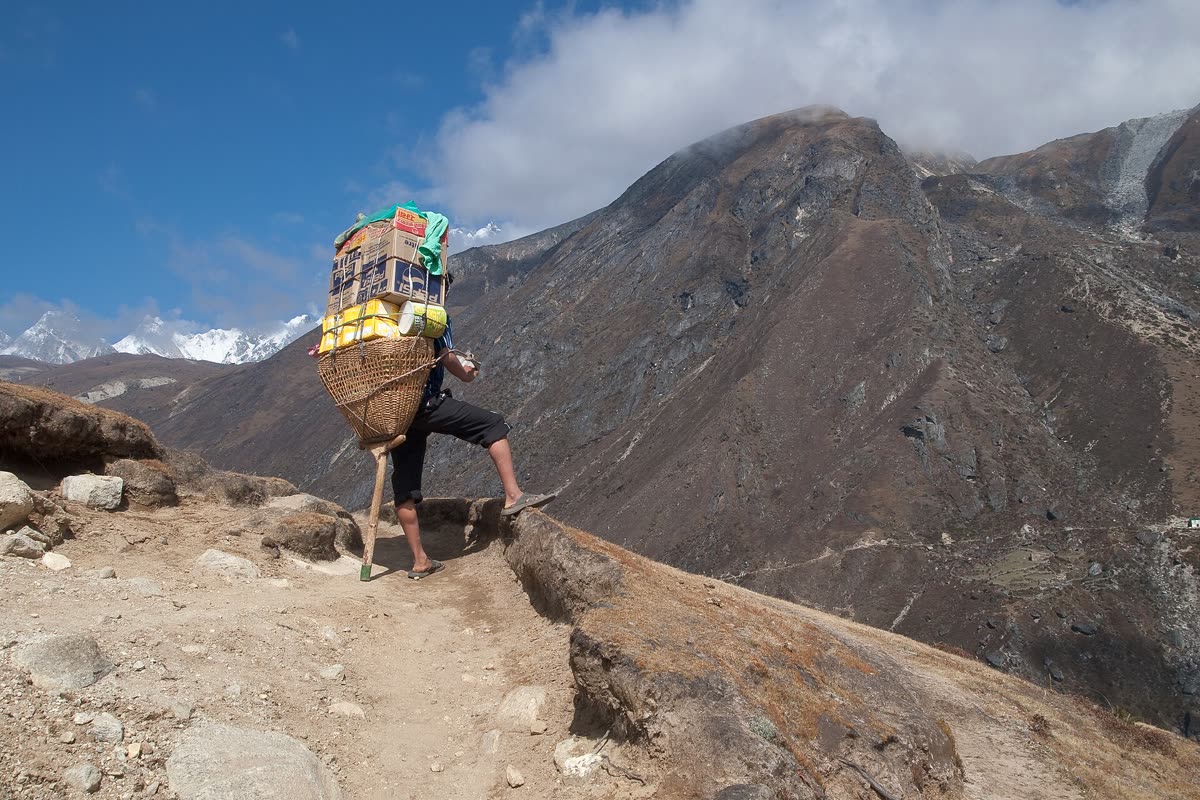
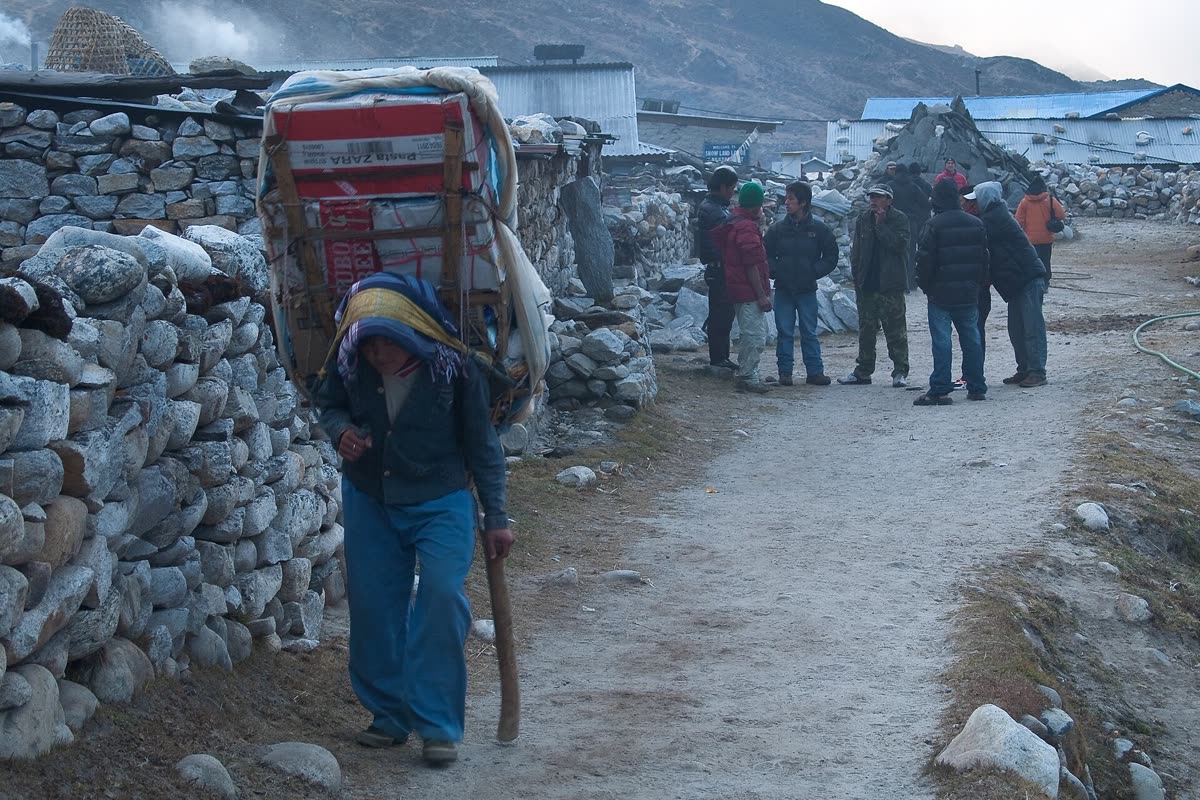
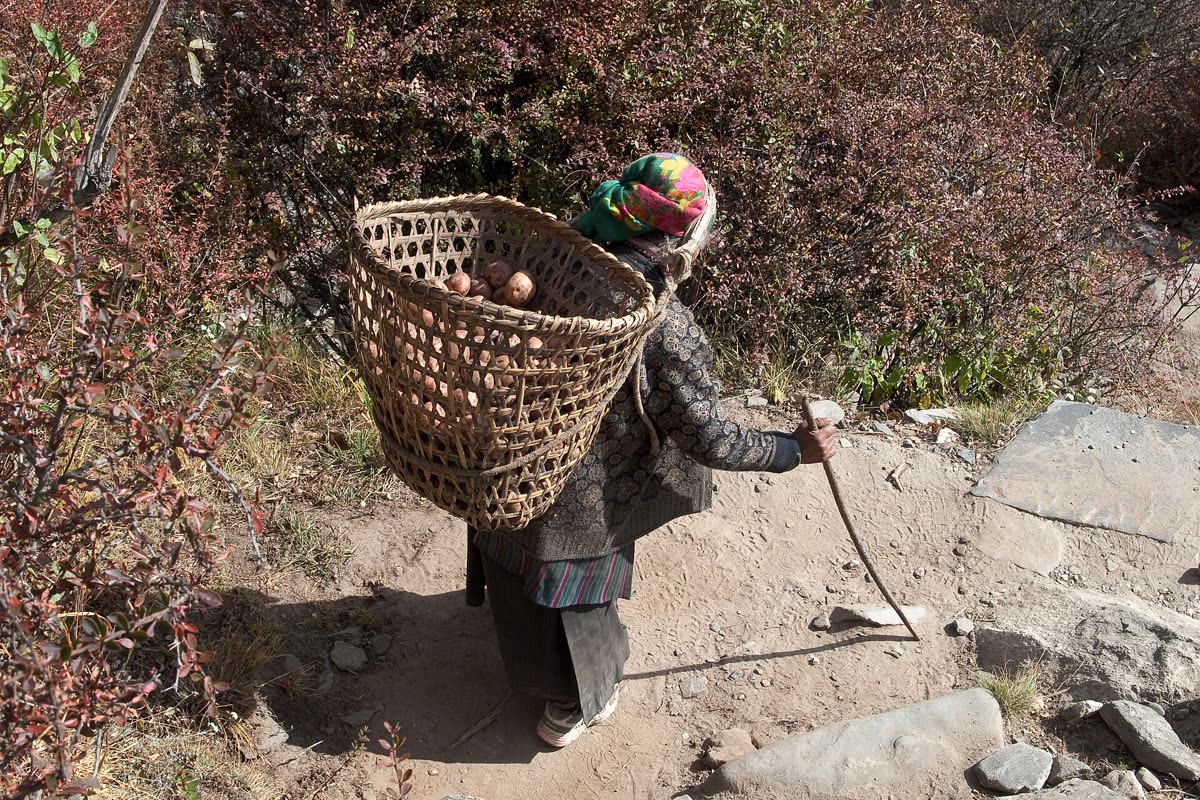
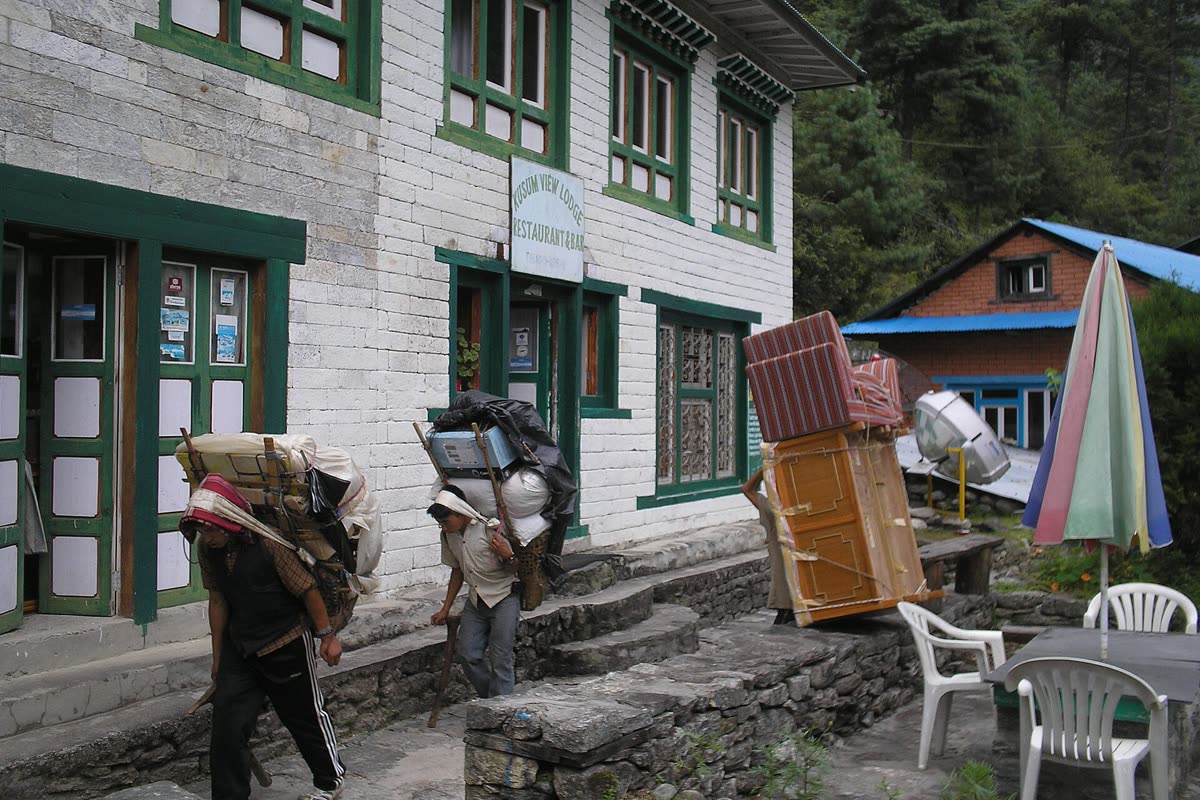
On the climb out of Phakding you will, sooner or later, step aside for someone carrying a door. Not a plank — a finished door, hinges on, wrapped in sacking and strapped to a bamboo frame. Behind him might come a man with four sheets of corrugated roofing, or a woman with a crate of eggs stacked higher than her head.
There are no roads in the Khumbu. Not one. Everything above Lukla — every window frame, gas cylinder, solar panel, crate of Coke, and the bed you will sleep in tonight — arrived on a back or a yak. The lodge that feels ordinary when you walk into it exists because somebody carried it up a hill, piece by piece, over several days.
The tumpline, and why they walk like that
Nepali porters carry with a namlo — a woven strap across the forehead rather than the shoulders. It transfers the load down the spine instead of hanging it off the collarbones, which is why they can move loads that look impossible.
It also explains the walk: short steps, head down, a rhythm that almost never breaks, and a rest taken standing up with the load propped on a T-shaped stick called a tokma. Sitting down would mean lifting the whole thing again.
Stand on the uphill side of the trail when you let someone pass. On the downhill side, a wide load can catch you and put you off the edge. Your guide will tell you this on day one; it is worth remembering on day nine when you are tired.
What a fair load actually is
The International Porter Protection Group has argued for years for a 20 kg limit on trekking loads. Reputable operators work to something close to that. Freight porters — the ones with the doors and the roofing — often carry far more, and that is a different, harder economy that trekking companies do not control.
What we do control is what our own trips ask of people. One porter per two trekkers, weight-limited, insured, equipped and lodged indoors. If your duffel is over the allowance, the answer is another porter and another wage — not a heavier load. We wrote the whole policy down on the responsible travel page.
How to be decent about it
- Pack less. The single most useful thing you can do. Most people come home having worn a third of what they brought.
- Ask your operator the weight limit before you book, and ask what happens if someone exceeds it. The answer tells you a great deal.
- Don't photograph people as scenery. Ask. Most will say yes, and you get a better picture and a short conversation out of it.
- Learn two words. Namaste and dhanyabad — hello and thank you. It costs nothing and changes the tone of every encounter for two weeks.
None of this is charity. It is the difference between walking through somebody's home and walking through a landscape you think is empty.