The national dish, and the trekker's best decision
Dal bhat is lentil soup, rice, a vegetable curry, some greens and usually a pickle. It is what most Nepalis eat twice a day, and on a trek it is almost always the right order.
Three reasons. It is cooked fresh, because it is what the lodge family is cooking for themselves anyway. It is carbohydrate-heavy, which is exactly what a body working at altitude wants. And in most teahouses it comes with refills — the plate gets topped up until you stop.
Dal bhat power, 24 hour
You will see it on a hundred lodge walls and hear it from every guide on the trail, usually delivered with a completely straight face. It is a joke that is also broadly true: on a long walking day, the trekkers who ordered dal bhat are the ones still going at four in the afternoon.
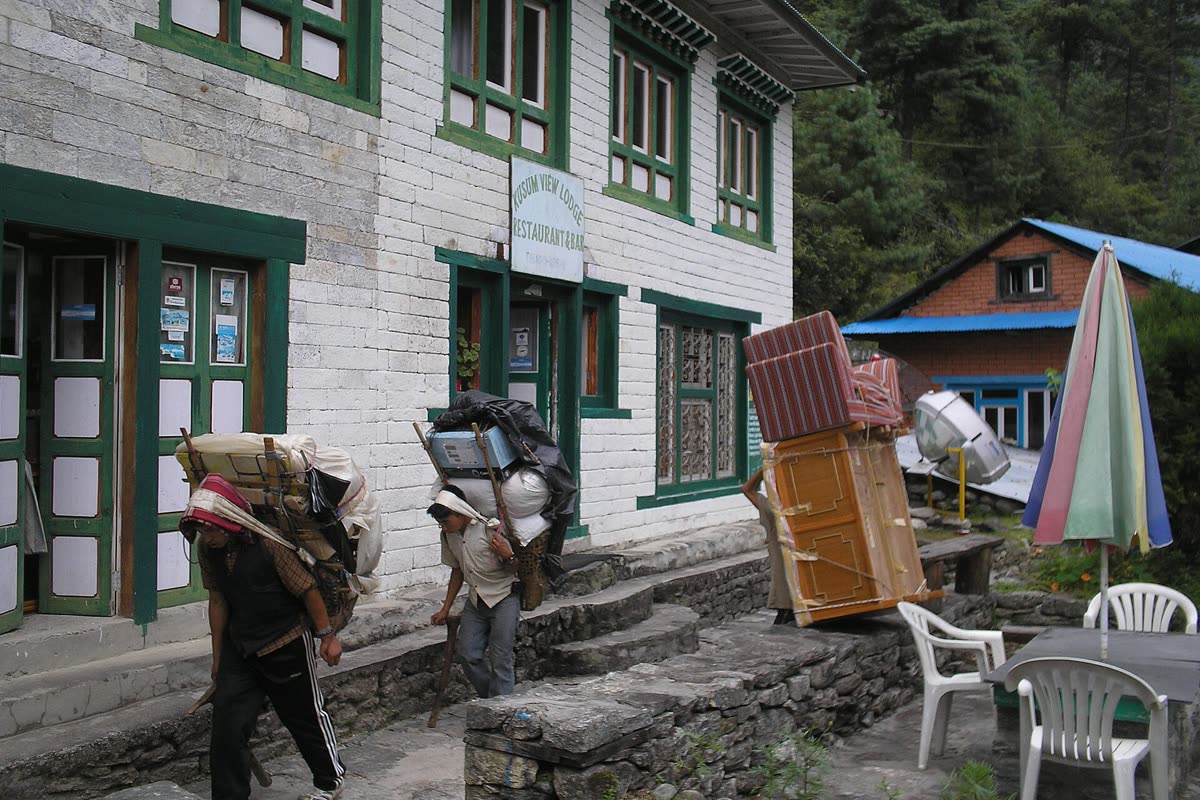
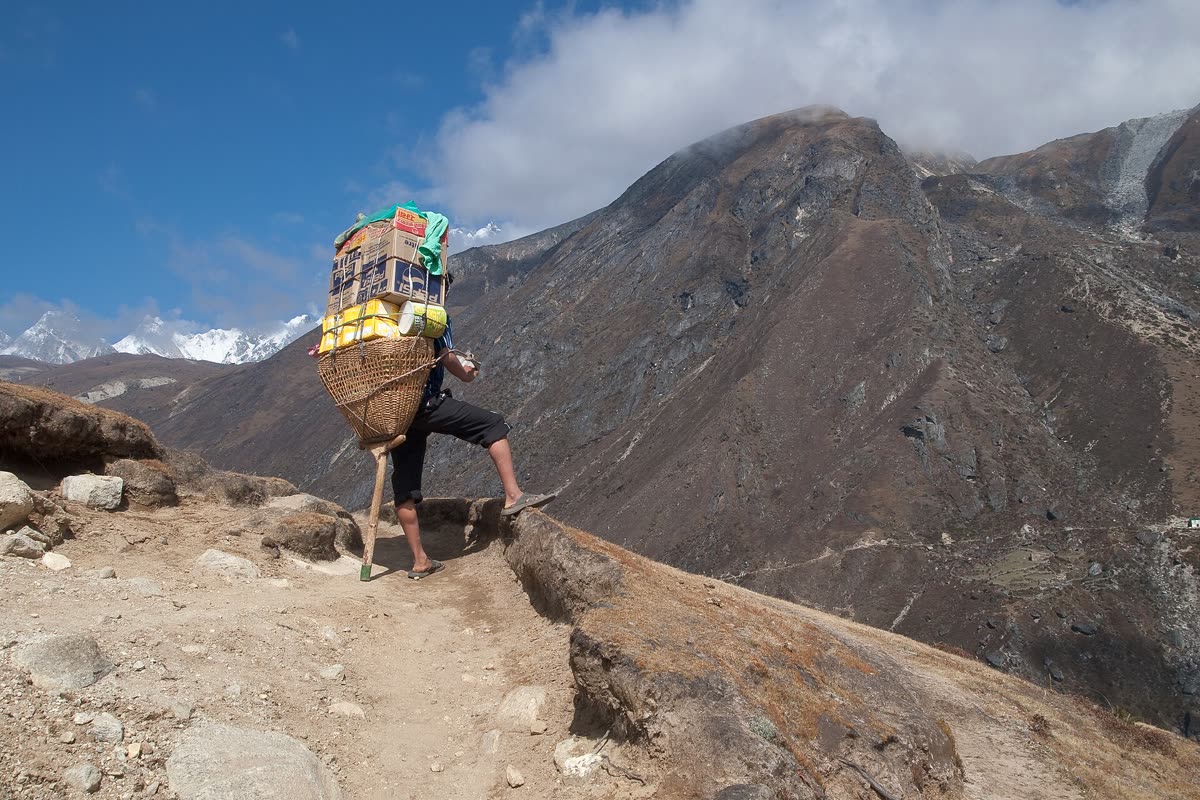
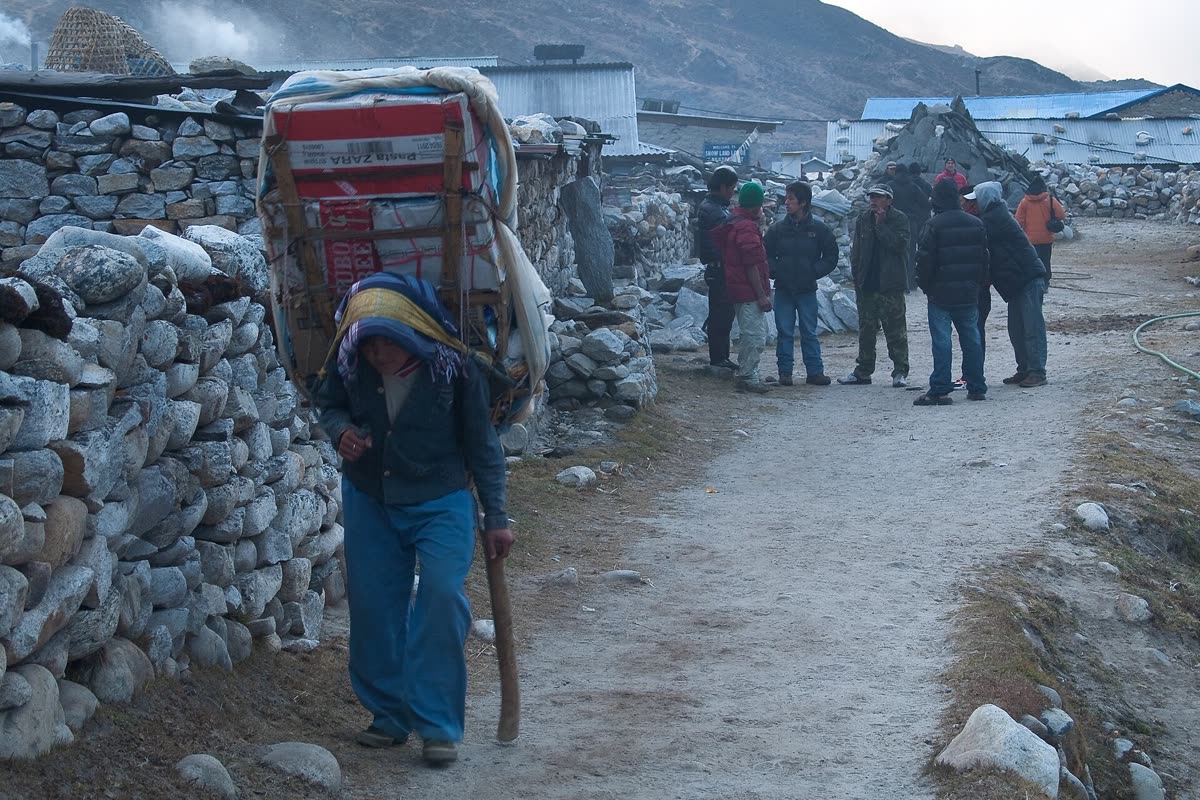
The people carrying forty kilos up the same hill are not eating pizza.
When you cannot face it again
Around day eight, some people hit a wall with it. Reasonable alternatives, roughly in order of how well they travel:
- Fried rice or noodles — safe, fast, usually good.
- Thukpa — Tibetan noodle soup, excellent when it is cold, and it usually is.
- Momos — very good low down; higher up they can sit heavily.
- Sherpa stew — thick, warming, hard to get wrong.
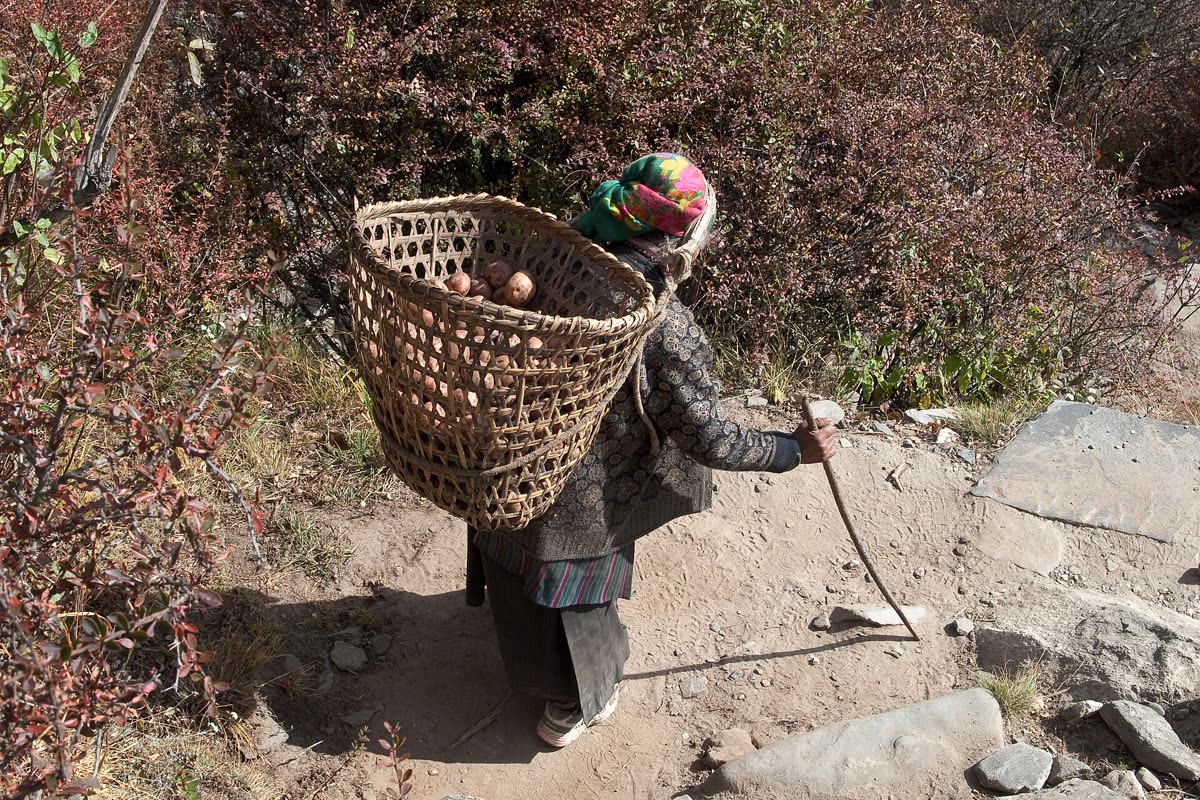
- Potatoes — the Khumbu grows superb ones. Order them any way they are offered.
Meat is worth thinking about above Namche. It was carried up unrefrigerated over several days, and Sagarmatha National Park is technically a slaughter-free zone, so it came a long way. Most guides go vegetarian on the trail — not on principle, but on experience. Avoiding a stomach upset at 4,500 m is worth more than a plate of yak steak.
Drinking
Three to four litres a day, more than feels natural. Dry air and hard breathing dehydrate you faster than the same effort at home, and dehydration produces a headache that is easily mistaken for altitude sickness.
Treat your own water rather than buying bottled — tablets, drops or a SteriPen. It is cheaper, and every plastic bottle carried above Lukla stays in the Khumbu. Ginger tea and hot lemon are on every menu and are a good way to get fluid in when cold water is unappealing.
Alcohol, on the other hand, is worth leaving alone above about 3,000 m. It suppresses breathing at exactly the point your body is working hardest to acclimatise. There is beer at Base Camp altitude. There is a reason your guide will look unimpressed.